Early orthodontic assessment can help guide the development of your child's teeth and jaws, addressing potential concerns before they become more complex.


Understanding Interceptive Orthodontics
Interceptive Orthodontics is the diagnosis and treatment of teeth or jaw misalignment (malocclusions) for young children from the age of 7.
Traditionally, children begin orthodontic treatment from ages 12–14 after all or most of the permanent teeth have erupted. Sometimes this treatment involves tooth extractions to correct the bite or crowding. However, interceptive orthodontics is a newer technique used to avoid complex orthodontics for children later in life.
Using early diagnosis of potential malocclusions, our orthodontic specialists can use interceptive orthodontics to treat children from age 7. This can often prevent the need for more complicated treatment later and can prevent tooth extraction.
The Right Time For Screening
At Heath Street Dental, our specialists recommend that children have an orthodontic assessment by age 7. Typically by age 7 the first set of permanent molars have erupted and we can use interceptive orthodontics if necessary. At this stage we would aim to deal with issues such as misaligned, crowded or protruding teeth. We can also correct habits such as thumb sucking, which can cause future misalignment.
Why Is Age 7 Considered the Optimal Time for Screening?
Our specialists recommend that the initial orthodontic evaluation should occur at the first sign of orthodontic problems or no later than age 7. At this early age, interceptive orthodontics may not be necessary. However, careful examination can anticipate the most advantageous time to begin treatment.
This early treatment is aimed at preventing or “intercepting” more serious problems later. Treating children at an earlier age, such as between 7 to 11 years, also takes advantage of the child’s continuing growth. Typically they are more compliant and receptive to treatment at this age.
Benefits of Interceptive Orthodontics Include:
Why Choose Us
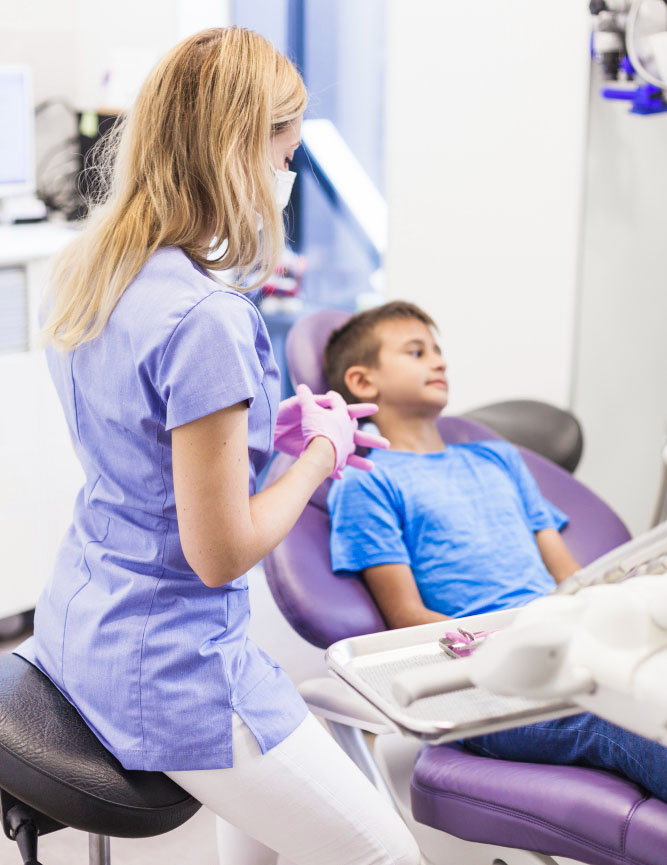
At Heath Street Dental, we focus on early assessment and personalised interceptive orthodontic care to help guide your child’s dental development and address potential concerns at the right time.
Early orthodontic screening helps identify developing concerns and determine the most appropriate time for treatment.
We carefully assess your child's individual dental development to provide the most suitable orthodontic care.
Interceptive orthodontics can help address developing issues before they become more complex later.
Early treatment can help guide jaw growth and support healthier tooth alignment as your child develops.
Addressing orthodontic concerns early may reduce the need for more extensive treatment in the future.
Our experienced team supports you and your child with clear advice throughout their orthodontic journey.
Understanding Early Orthodontic Care
Explore common questions about interceptive orthodontics, early orthodontic assessments, and how timely treatment can support your child’s developing teeth and jaws.
Interceptive orthodontics is early orthodontic treatment used to identify and address developing problems with the teeth and jaws while a child is still growing.
Children are generally recommended to have an initial orthodontic assessment by the age of 7, or earlier if signs of orthodontic problems are noticed.
No. An early orthodontic assessment does not mean treatment is always necessary. It helps identify potential concerns and determine whether treatment may be beneficial.
Interceptive treatment may help address concerns such as crowding, protruding teeth, bite problems, jaw development issues and habits such as prolonged thumb sucking.
In some cases, early orthodontic treatment can help guide dental development and create space for developing teeth, which may reduce the need for tooth extraction later.
Because children are still growing, early orthodontic treatment can sometimes help guide jaw growth and support better facial and dental development.
The orthodontist will examine your child's teeth, bite and jaw development to identify any existing or developing orthodontic concerns and recommend the most appropriate next steps.
This depends on your child's individual development. Some children may still require comprehensive orthodontic treatment later, although early treatment may help make future treatment less complex.
Early assessment can help identify developing orthodontic concerns and guide treatment at the right time. Speak with our specialist team to find out whether interceptive orthodontics could benefit your child's developing smile.
Patient Stories
We’re proud to care for patients across Hampstead and beyond. Here’s what they have to say about their experience at our dental practice.

From the moment I walked in, the team made me feel comfortable and at ease. The dental examination was thorough and reassuring.

Friendly staff, flexible appointment times, and a very professional dentist. I finally feel confident about my dental health.

The practice is clean, modern, and welcoming. Everything was explained clearly, and I never felt rushed.

I’m usually nervous about dental visits, but the team was incredibly kind and patient. Highly recommended.
Your dental health is important to us.Whether you need advice, an appointment, or emergency care,our dedicated team is always ready to help with compassion and expertise.Expect a response from us within 24 hours — because your smile deserves timely care and attention.
4.9 out of 5 Stars From 47 Reviews
Providing trusted dental care for families and individuals — because every smile matters to us always, with comfort and compassion.
Copyright © 2017 – 2026 All Rights Reserved. Heath Street Dental, 116 Heath Street, Hampstead, London, NW3 1DR, Hampstead Dentist